The design
The Home Page
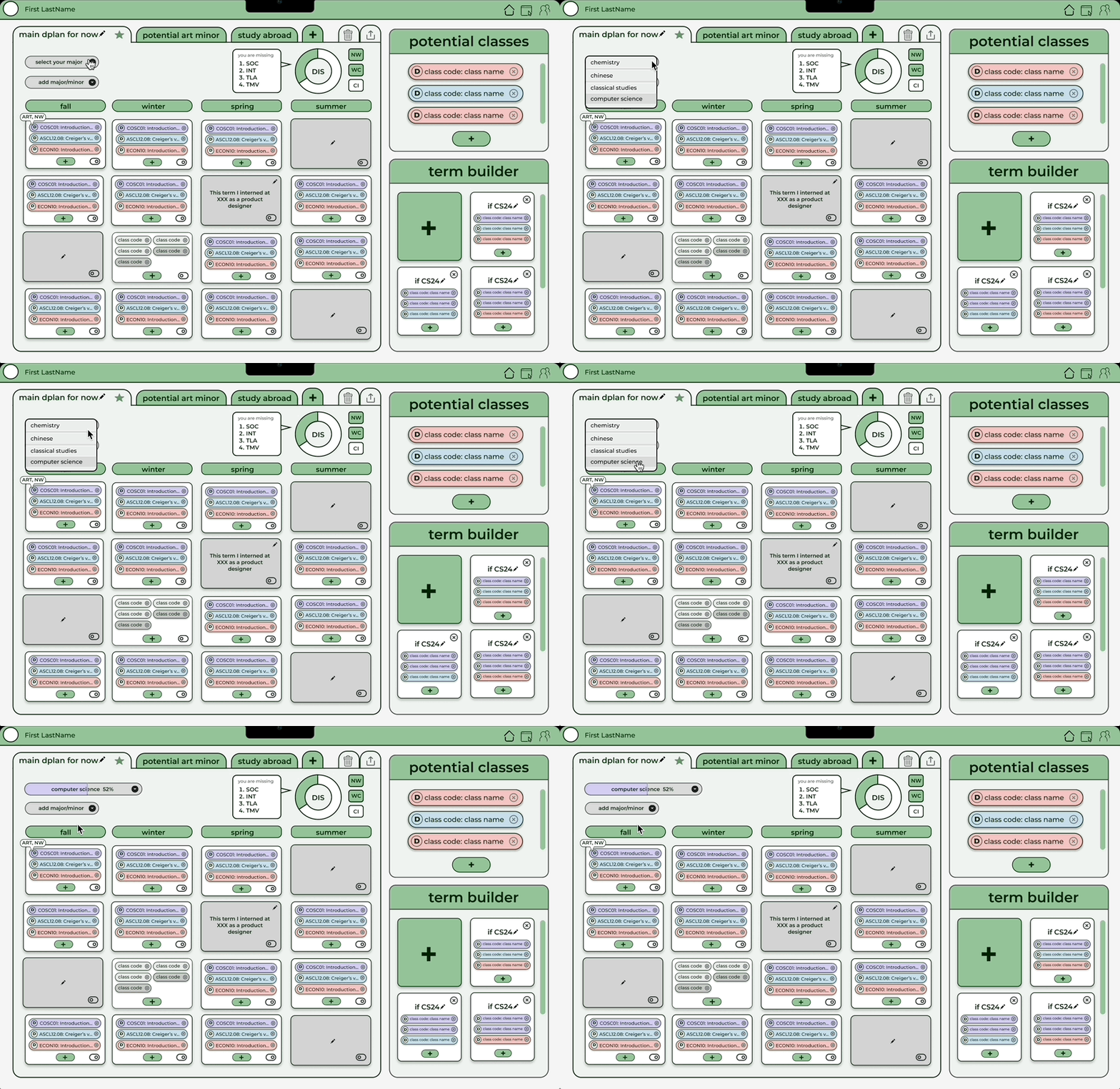
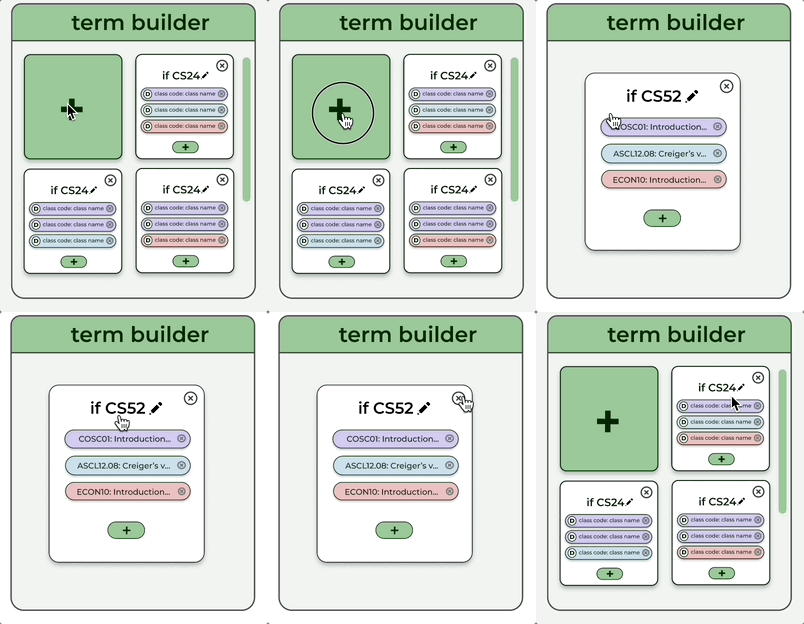
The home page allows users to visualize different four-year plans easily and experiment with different majors, courses, and D-plans using drag and drop and customized color coding. Additional features such as the distributive pie and major progress bar help reduce the number of websites students have to reference during course election periods.
Term Builder
Off Term Toggle
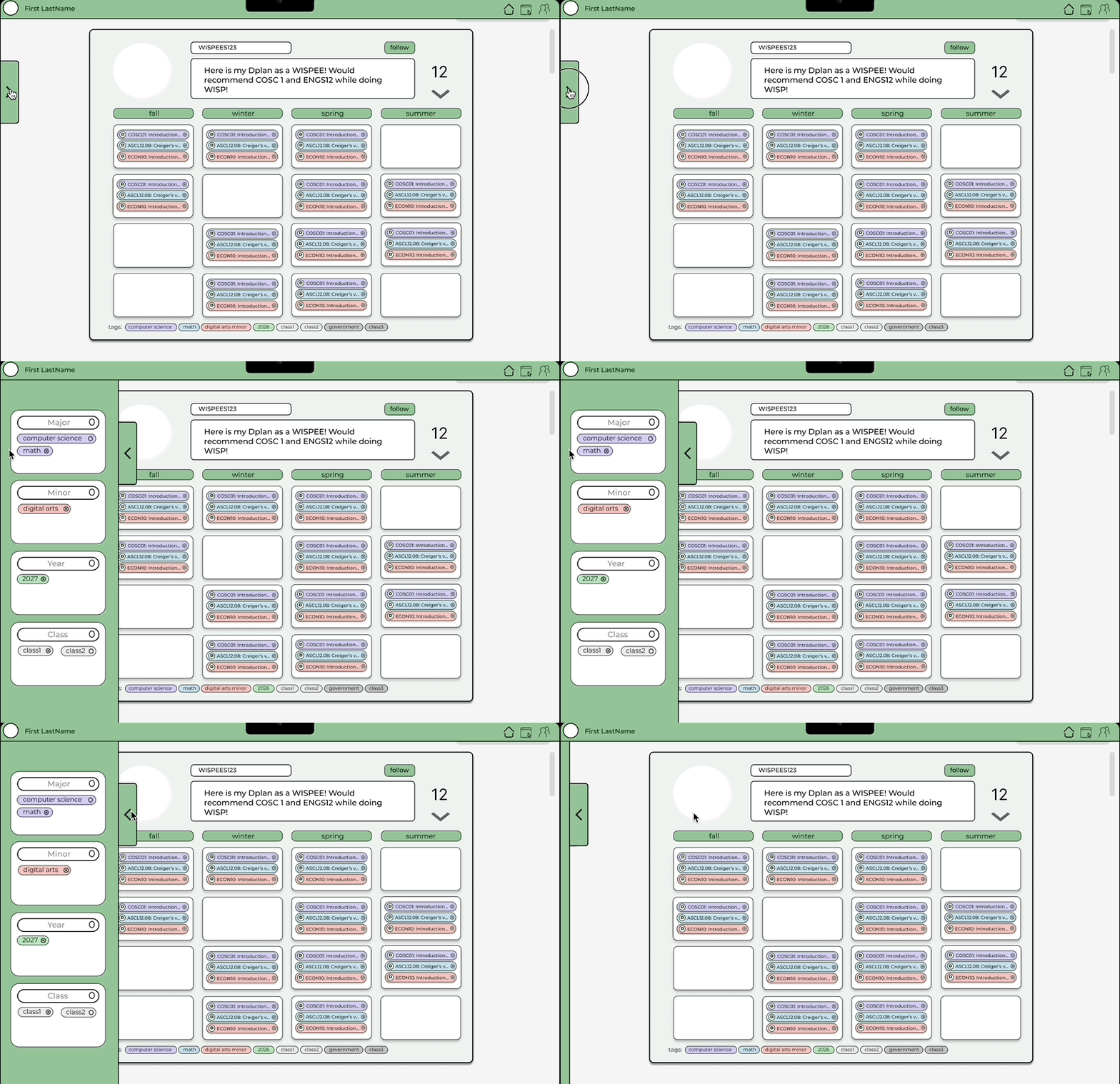
The Main Feed
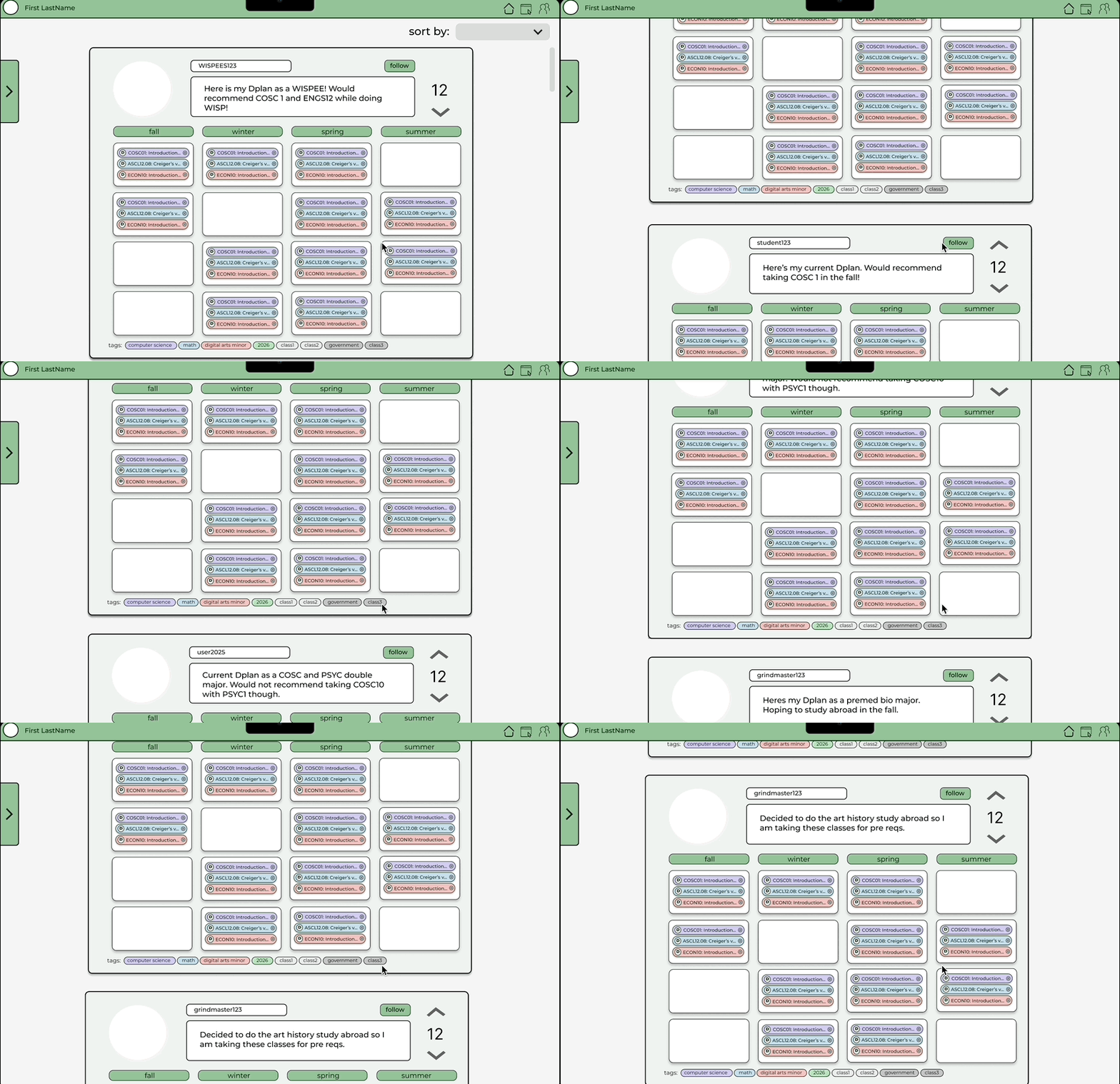
The main feed targets the need for students to feel more guided in their course planning process, while making course planning more social and fun. This feature allows users to use other students’ D-plans as inspiration for course combinations. Students can also use this to align off terms or classes with friends.
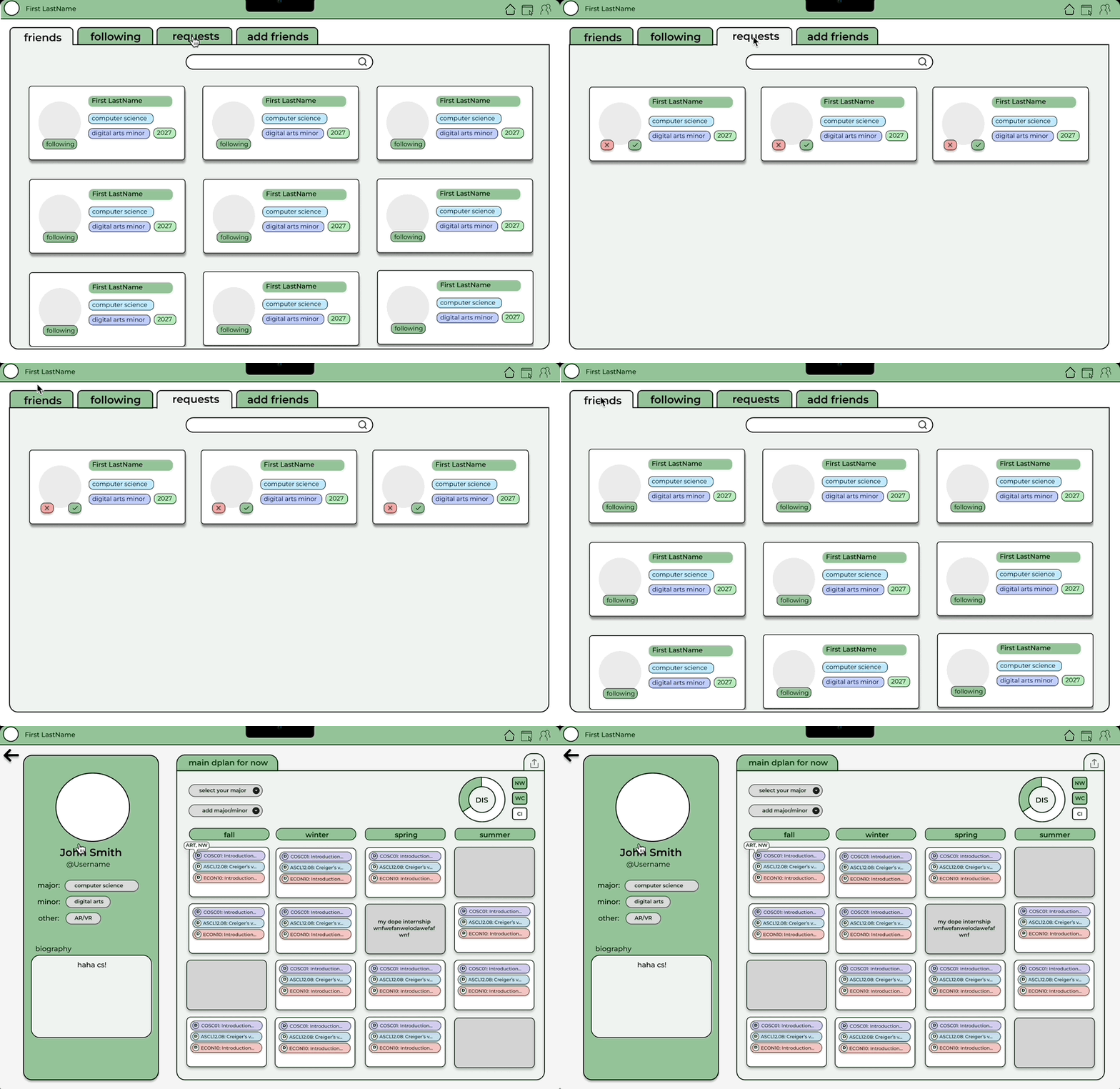
The Friend Page
The Friend Page allows users to build a community to support their course planning process. Students can connect with friends or follow people with similar academic paths for guidance, advice, and support.
Process highlights
I tackled ambiguity with collaboration, curiosity, and adaptability
Collaboration
After brainstorming a wide variety of solutions, we voted among ourselves and decided to make an app to help students make study groups.
Curiosity
After initial interviews, I noticed there was not a need for a study group app. I advocated for a pivot to a more impactful project and suggested an improved menu app based on early user excitement.
Adaptability
But when our mentor mentioned Dartmouth dining had been historically difficult to collaborate with, we decided to pivot to improving the course election experience.
I used visual tools to help synthesize my research
We conducted 13 user interviews and synthesized our findings using personas, empathy maps, and POV statements.
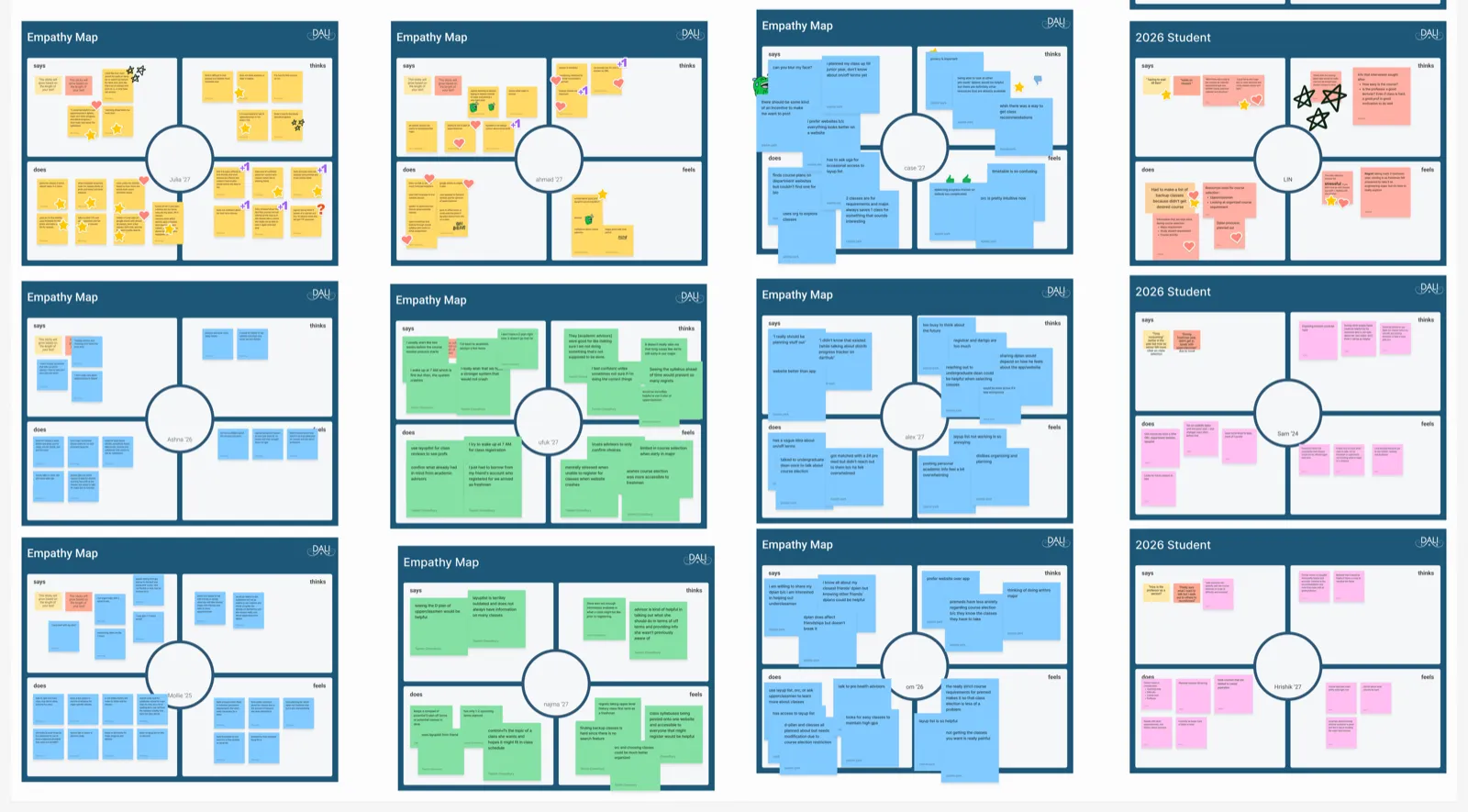
Key Findings
- Students need information from at least 4 websites when course planning
- Students value course recommendations from other students over layup list and dean recommendations
- Students find course planning stressful
I learned how to break down large tasks
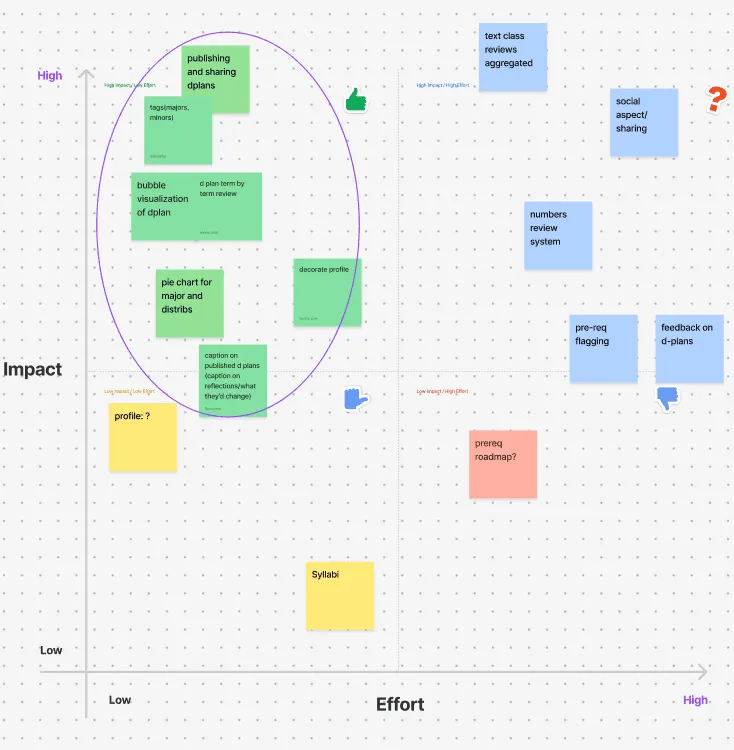
Narrowed our feature scope via a feature prioritization matrix
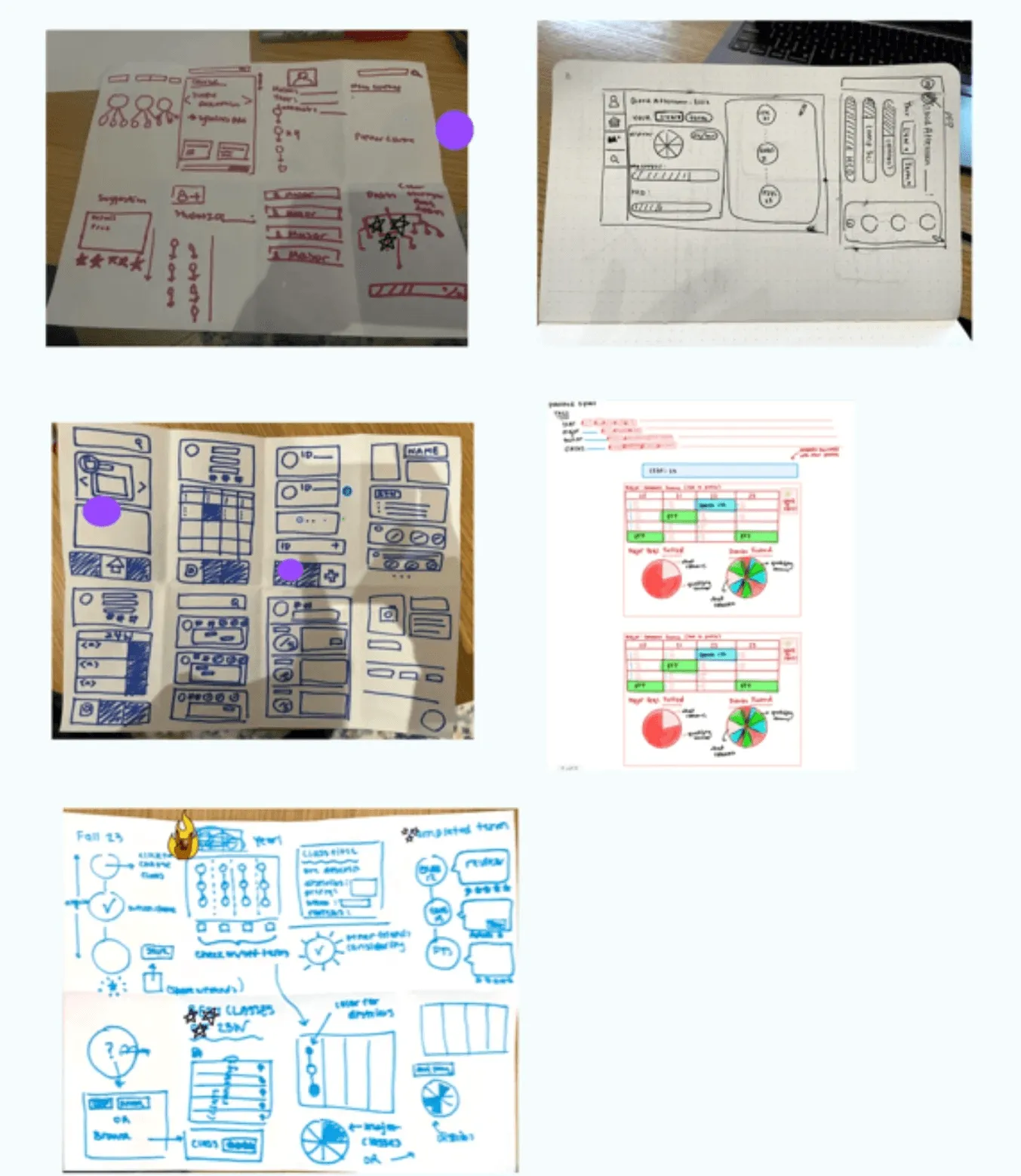
Broke our brainstorming sessions into Crazy 8s
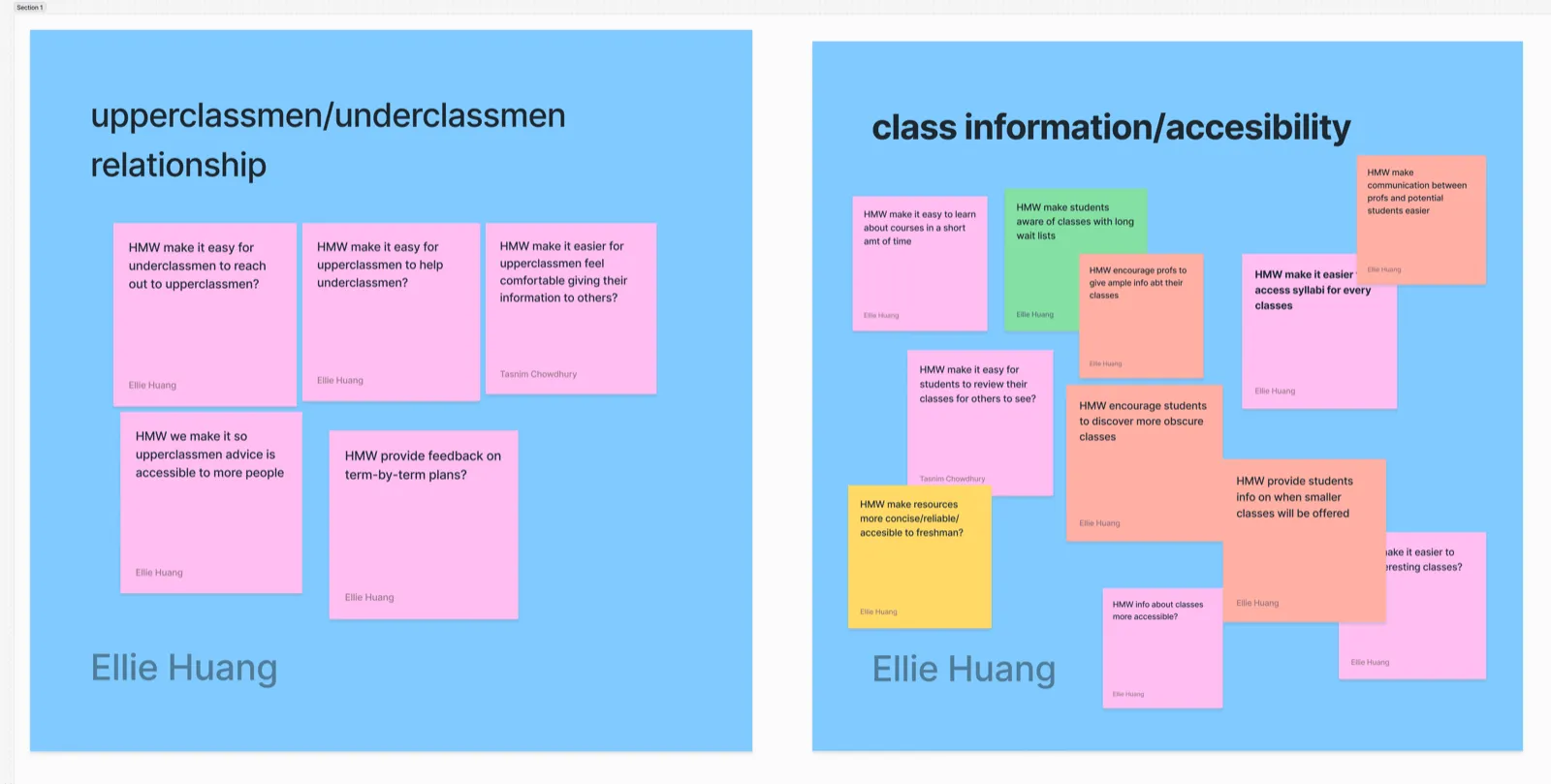
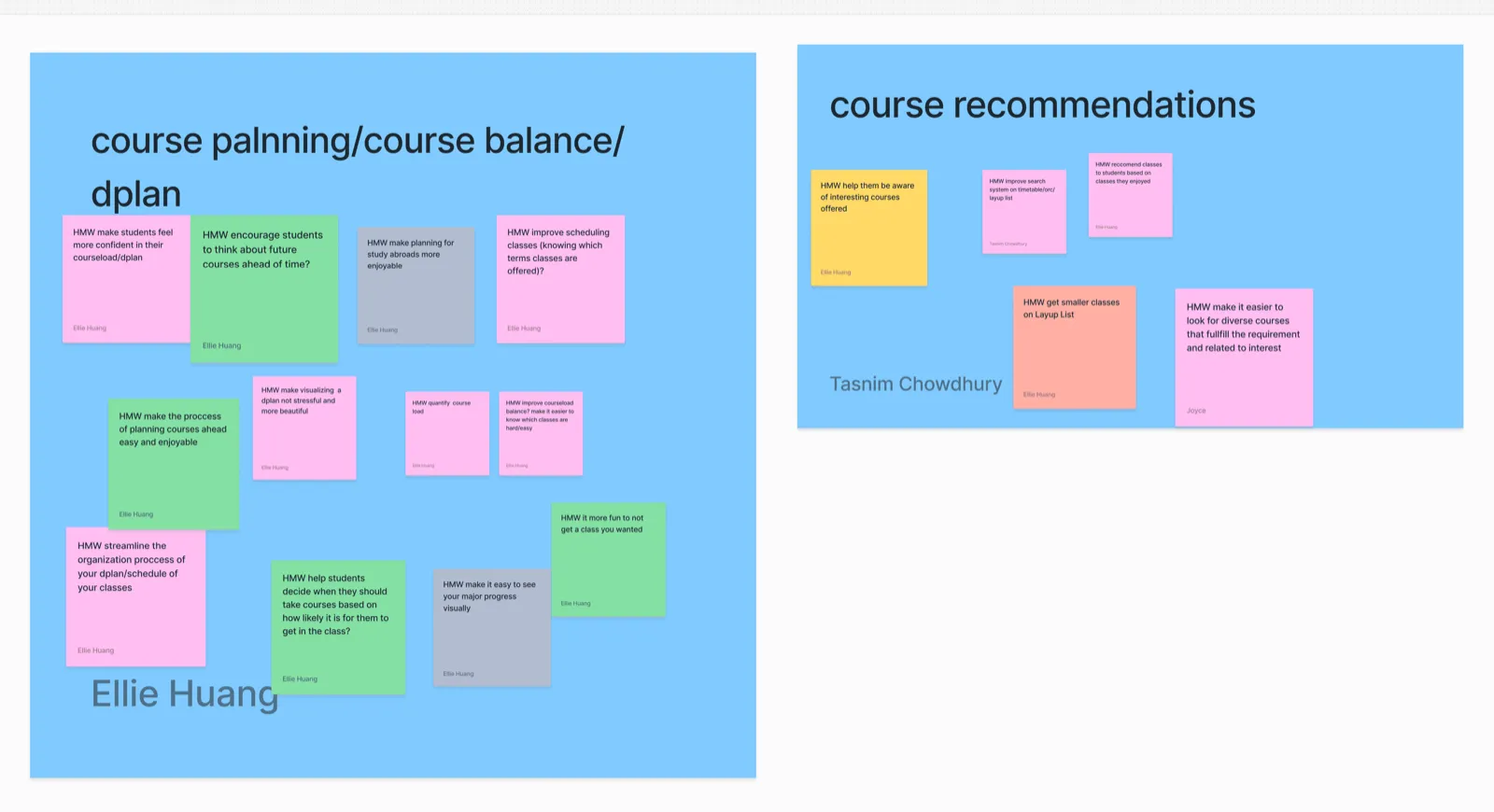
Broke course planning into 4 main pain points
Reflections
What I learned
This project was my first full design project. Under the mentorship of Maria Cristoforo and Sam Blais, and alongside my fellow WISPees, I learned how to turn an idea into a solution during a 10-week design process.
Technical Skills
I learned how to conduct and analyze user interviews, and use this data to create informed grayscales, hi-fis, and prototypes in Figma.
Succeeding Under Mentorship
In this mentorship experience I strived to always ask questions, clarify concepts, and ask for advice. This helped me quickly get the hang of Figma, Firebase, and React.
Learning from my Teammates
Throughout this project I valued the diverse perspectives of my teammates to come up with more ideas and make brainstorming more fun!
Next Steps
If I had more time with this project these are the areas I would work on…
- Fleshing out the social aspect of DartPath. During the design process we played with the idea of having comments and messages, but ultimately had to cut those features due to the tight timeline.
- Checking pre-reqs. A major need we discovered during user interviews was that students found finding the pre-reqs for classes frustrating, as they are listed separate from the time table. A feature we did not have time to incorporate was a checking feature that could ensure a student had completed the required pre-reqs for a class based on the position within the D-plan it was placed.